

The Transformation Economy
A few months ago I got to attend the Journees de l’Immersif conference in Lille. The immersive scene in France is clearly very vibrant, but it was something else that stuck out to me from all the great workshops and talks:
It’s super easy to love the experiential economy. It’s not so easy to admit when it gets a little fragile.
So, when Tristan and I got an opportunity to speak vulnerably about our experiences with Hotel Wonderland (see video above) it’s really, really nice when it’s received by such an incredibly generous and supportive audience. Also on the itinerary of speakers there was James Wallman who invited us as keynote speakers to the inaugural WXO – World Experience Organization Summit in London last week. He’s been instrumental in bringing people together across industries and borders to advocate for more experientialism, very much in the ethos of legendary author of the “The Experience Economy“, Joe Pine (who has more recently been advocating for an evolution into what he calls the transformation economy).
I’ll have to admit, my first feeling upon being invited by James bare no insignificant amount of healthy scepsis: do we really need another conference prophesizing the importance of experientialism in the future of work, culture and entertainment?
The answer: yes, if it attracts the right people.
As Punchdrunk’s The Burnt City and Disney’s Galactic Cruiser are taking their bows, I was questioning whether Hotel Wonderland’s early demise last year was perhaps the beginning of a wider trend in immersive entertainment. Maybe covid has brought about drastic cultural anthropological patterns we are just starting to feel the effects of: we book our vacations later, closer to home and the anticipated need for large scale, immersive “roaring 20’s escapism” is reserved for a select few rather than a passionate masses.
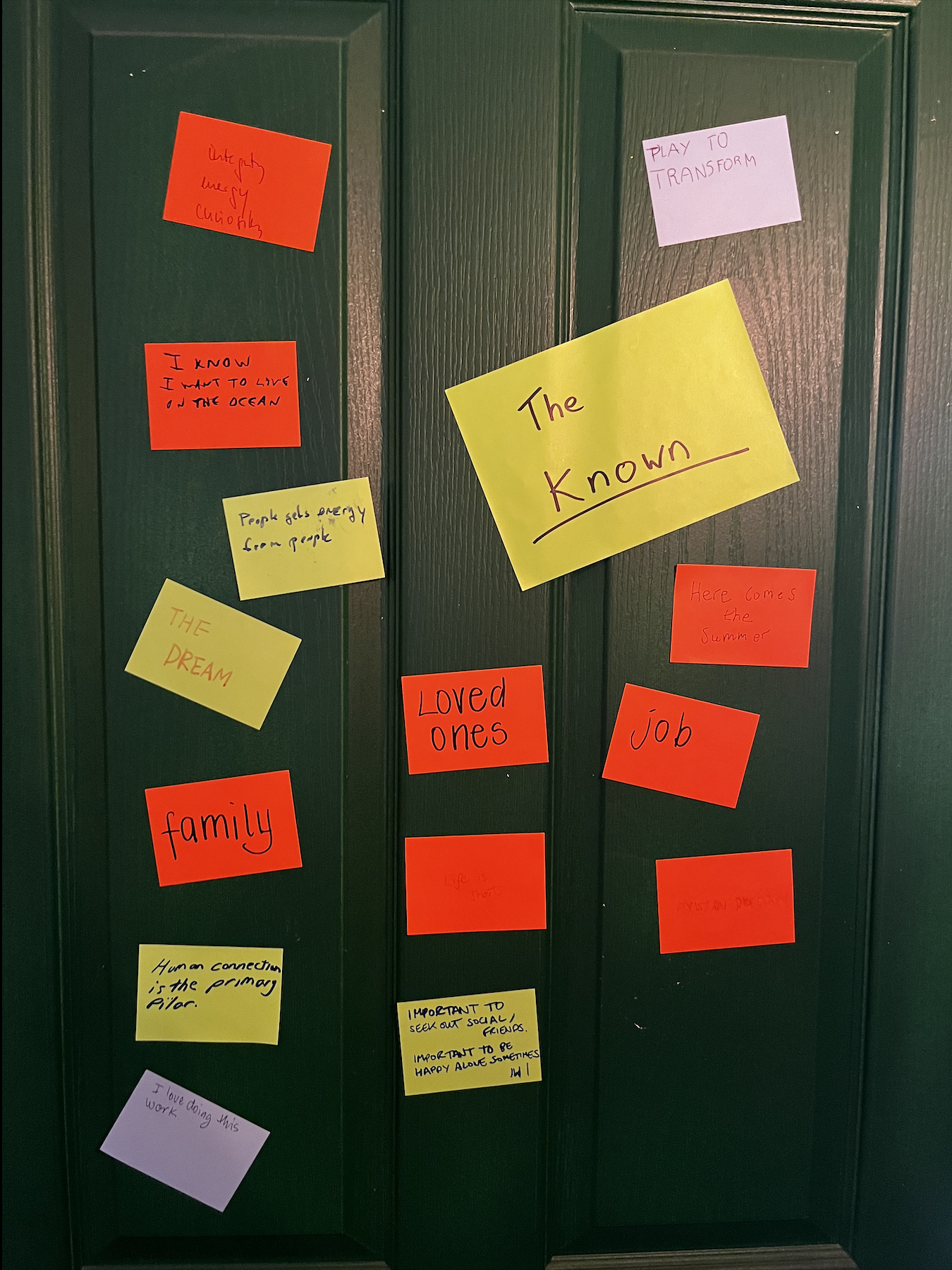
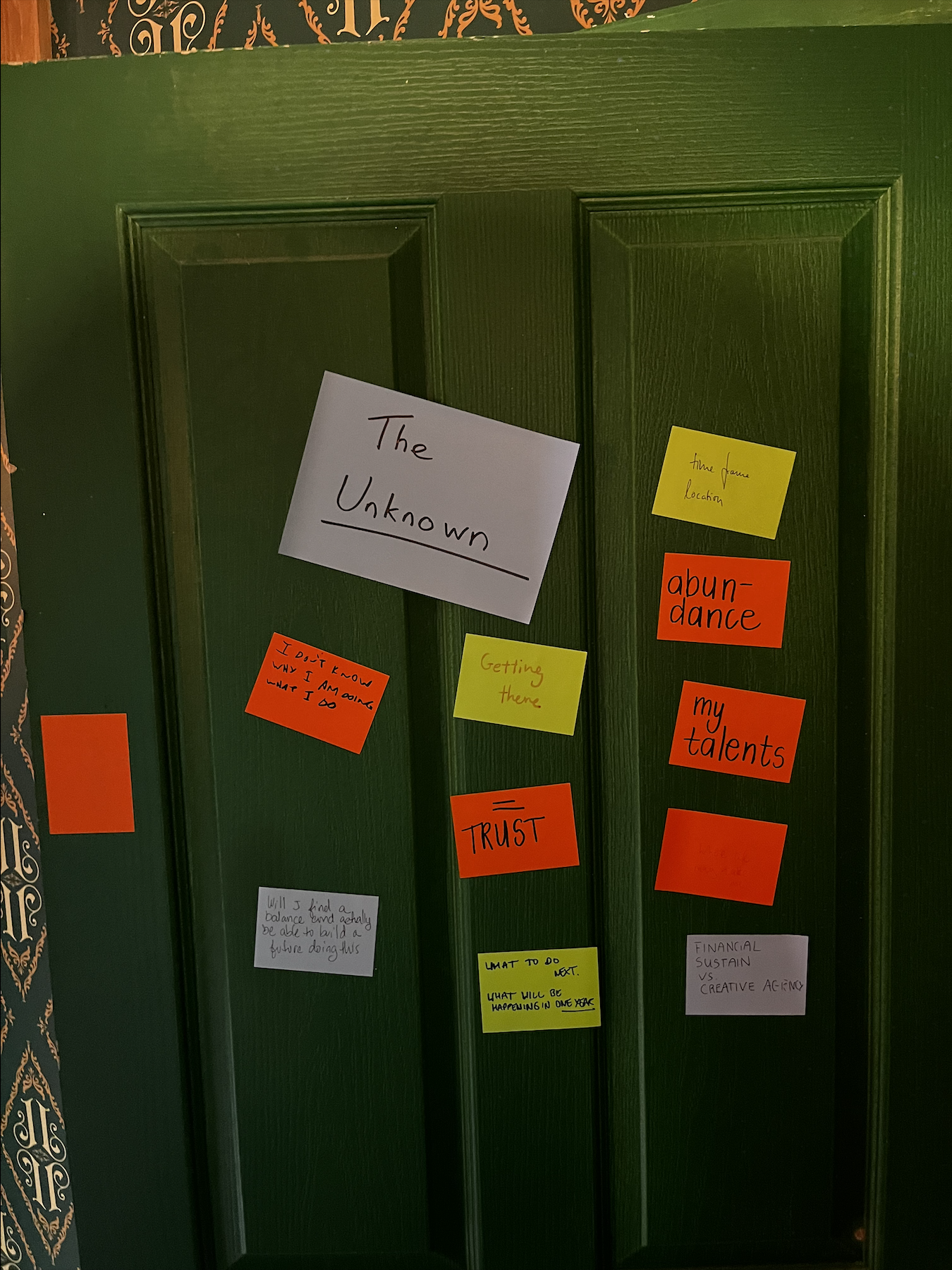
So it felt fitting for Tristan and me to share, vulnerably, a revision of our talk on the rise and fall of Hotel Wonderland, and more importantly how it might incite others moving forward. We chose to end our session in a manner fitting to the narrative choices of the show’s finale itself: by asking the audience to make a choice between the ‘known’ and the ‘unknown’, representing not only a fork in the road on a personal level but also the current crossroads ahead of the new age of immersive.
Here, I was particularly amused by the responses people gave to what they knew to be true about their industry when we asked people to identify so. None of these responses showed any signs of being primarily driven by economic gain or status increase. Rather, I’m seeing a collage of reflections on personal affections and human connection as the intuitive response to why people would choose the path of what they know to be true, deep down.
If this is the level of integrity that is spread amongst its participants, you can sign me up to preach its songs to the choir all day long.
P.S. Perhaps it’s the word ‘economy’ that needs a rebranding, rather than the adjective in front of it.

The Transformation Economy
A few months ago I got to attend the Journees de l’Immersif conference in Lille. The immersive scene in France is clearly very vibrant, but it was something else that stuck out to me from all the great workshops and talks:
It’s super easy to love the experiential economy. It’s not so easy to admit when it gets a little fragile.
So, when Tristan and I got an opportunity to speak vulnerably about our experiences with Hotel Wonderland (see video above) it’s really, really nice when it’s received by such an incredibly generous and supportive audience. Also on the itinerary of speakers there was James Wallman who invited us as keynote speakers to the inaugural WXO – World Experience Organization Summit in London last week. He’s been instrumental in bringing people together across industries and borders to advocate for more experientialism, very much in the ethos of legendary author of the “The Experience Economy“, Joe Pine (who has more recently been advocating for an evolution into what he calls the transformation economy).
I’ll have to admit, my first feeling upon being invited by James bare no insignificant amount of healthy scepsis: do we really need another conference prophesizing the importance of experientialism in the future of work, culture and entertainment?
The answer: yes, if it attracts the right people.
As Punchdrunk’s The Burnt City and Disney’s Galactic Cruiser are taking their bows, I was questioning whether Hotel Wonderland’s early demise last year was perhaps the beginning of a wider trend in immersive entertainment. Maybe covid has brought about drastic cultural anthropological patterns we are just starting to feel the effects of: we book our vacations later, closer to home and the anticipated need for large scale, immersive “roaring 20’s escapism” is reserved for a select few rather than a passionate masses.
So it felt fitting for Tristan and me to share, vulnerably, a revision of our talk on the rise and fall of Hotel Wonderland, and more importantly how it might incite others moving forward. We chose to end our session in a manner fitting to the narrative choices of the show’s finale itself: by asking the audience to make a choice between the ‘known’ and the ‘unknown’, representing not only a fork in the road on a personal level but also the current crossroads ahead of the new age of immersive.
Here, I was particularly amused by the responses people gave to what they knew to be true about their industry when we asked people to identify so. None of these responses showed any signs of being primarily driven by economic gain or status increase. Rather, I’m seeing a collage of reflections on personal affections and human connection as the intuitive response to why people would choose the path of what they know to be true, deep down.
If this is the level of integrity that is spread amongst its participants, you can sign me up to preach its songs to the choir all day long.
P.S. Perhaps it’s the word ‘economy’ that needs a rebranding, rather than the adjective in front of it.